
Chief Science Officers across the country are turning passion into action, and CSO Emma from Michigan is a standout example of what sustained student leadership can achieve.
Over the past four years as a Chief Science Officer, Emma has completed six impactful Action Plans, with several more underway. Her work reflects a deep commitment to STEM education, innovation, and sustainability, both in her school and her broader community.
Emma’s journey began in her freshman year with the creation of a pollinator garden at her middle school, supporting local ecosystems while introducing younger students to environmental science. The following year, she revived her middle school’s STEM & Leadership Club, engaging 20 students in hands-on STEM activities while building leadership and collaboration skills.
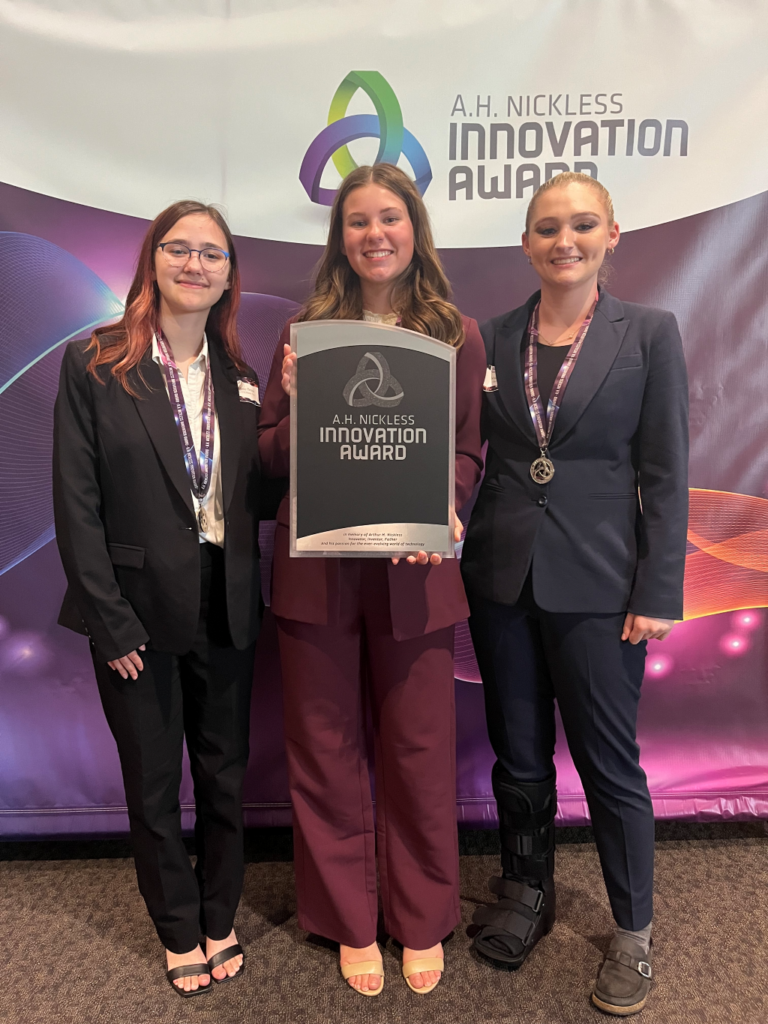
During her sophomore and junior years, Emma expanded her impact through innovation competitions. She formed a team to compete in the A.H. Nickless Innovation Competition, earning third place their first year with pediatric cancer kits for cars. The following year, her team earned second place for Hydro-Roofing, a 3D-printed roofing tile system that circulates water to better insulate homes and reduce the effects of climate change.
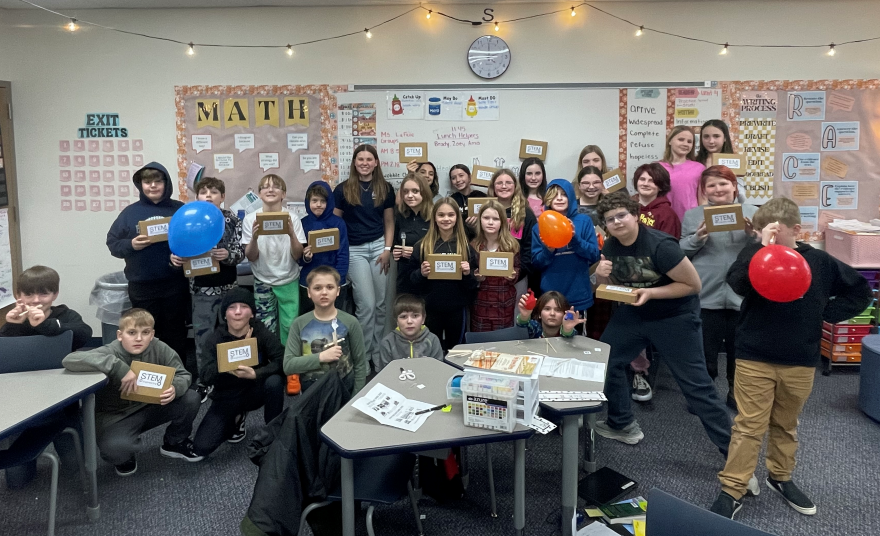
Emma reinvested her competition winnings back into her school, purchasing two 3D printers and transforming a former science storage closet into a mini–STEM Lab. That same year, she designed and distributed 60 engineering kits to two fifth-grade classrooms, extending hands-on STEM learning to younger students.
Today, Emma continues to push the boundaries of student-led science. She is currently working on a research project analyzing honeybee brood, collaborating with a coding professor from Saginaw Valley State University and her AP Biology teacher. They’re developing code that can analyze images of brood frames and accurately count brood cells—combining biology, computer science, and real-world research.
In addition, Emma and her team are preparing for another A.H. Nickless Innovation Competition, with project ideas focused on sustainable energy or detecting “forever chemicals.” At her high school, Emma and fellow Chief Science Officers are leading efforts to become a Michigan Green School by implementing sustainability initiatives campus wide. One upcoming summer project includes converting a science office into a grow room and constructing an exterior door that opens into an overhanging greenhouse.
Emma’s leadership demonstrates how students can apply STEM knowledge to address real challenges in their schools and communities. Through research, engineering, sustainability initiatives, and peer engagement, she continues to expand opportunities for hands-on learning while strengthening collaboration across grade levels and institutions. Her work reflects the growing role Chief Science Officers play in advancing practical, student-driven solutions that have lasting value for schools and communities across Michigan.