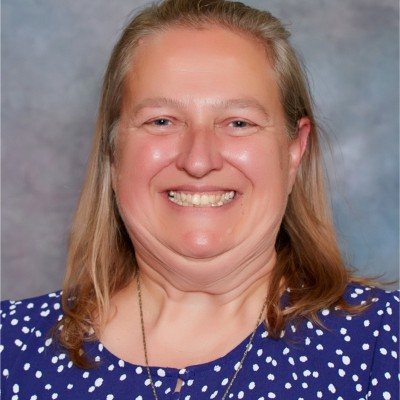
For Lori Gwyn, a love of STEM started with something many science students know well: the periodic table.
As a ninth-grade Physical Science student, Lori was introduced to what she now jokingly calls “the world’s biggest cheat sheet.” Once she understood how to read it, she began to see just how organized the universe could be. That lesson ignited a lifelong interest in science that eventually led her to study biochemistry and build a career in education.
Today, Lori teaches high school science in Clinton, Oklahoma, and is bringing that same enthusiasm for discovery to her role as a STEM Ambassador with the U.S. Department of War for the 2026–27 school year, working with SciTech Institute and the Chief Science Officers (CSO) program.
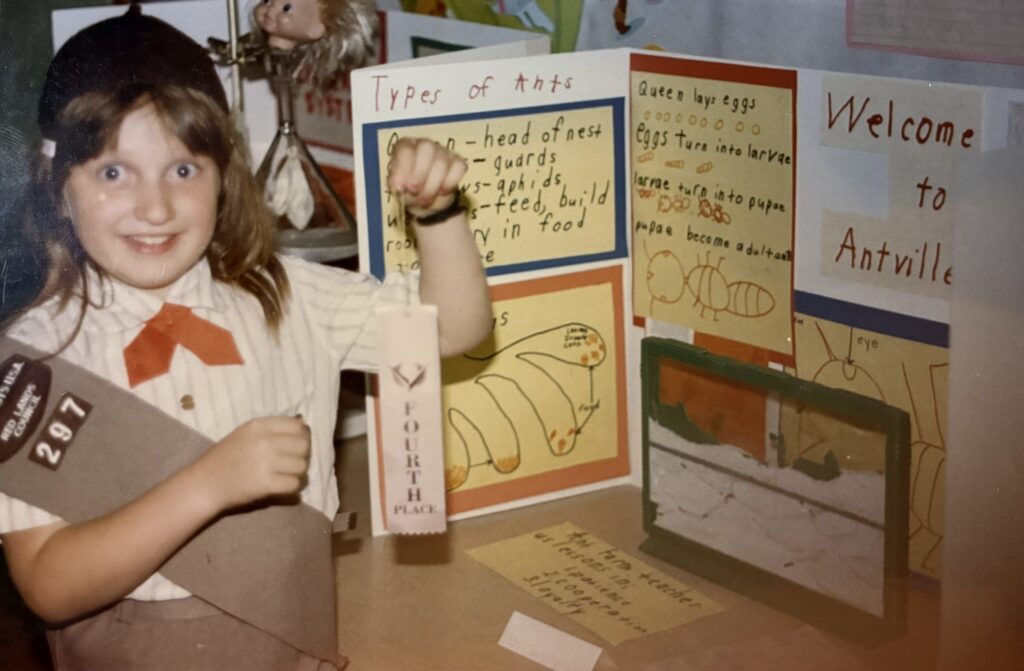
Lori decided she wanted to become a teacher when she was just five years old and is now a fourth-generation Oklahoma educator. But the direction her own STEM journey would take was something she discovered along the way.
“I had teachers who came into my life at exactly the right times; people who encouraged me, challenged me, and helped me see possibilities for myself that I couldn’t yet see,” Lori said. “I want to provide those same opportunities for other students.”
For the past 16 years, she has worked to do exactly that through programs including Girl Scouts, FIRST Robotics, and Tech Trek/SAGE STEAM Camp for girls. As a STEM Ambassador, she hopes to continue helping students discover opportunities they may not have imagined for themselves.
That goal is also part of what excites Lori about working with Chief Science Officers. Through the CSO program, students in grades 6–12 have opportunities to identify issues that matter to them, develop Action Plans, and take an active leadership role in their schools and communities.
“Young people have energy, creativity, and an understanding of their own world that adults cannot readily replicate,” Lori said. “They see challenges differently, ask different questions, and often imagine solutions that would never occur to us.”
After years in the classroom, Lori has seen firsthand how much students can contribute when provided with the opportunity. She sees mentorship as an important part of the process, providing students with resources, encouragement, guidance, and connections while still allowing them to take ownership of their ideas.
“I see my role as helping students develop the confidence and skills they need to lead, connecting them with opportunities, and then being willing to get out of their way,” she said. “We are preparing students for a future that belongs to them. I want them to know they don’t have to wait until they are adults to begin shaping it.”
During her year as a STEM Ambassador, Lori also hopes to help students discover just how broad the STEM opportunities connected to the Department of War can be. While students might first think of soldiers, aircraft, or weapons, the department also relies on chemists, biologists, physicians, engineers, computer scientists, mathematicians, environmental scientists, and many other STEM professionals.
Research connected to national security can also have applications well beyond its original purpose, including advancements in medicine, prosthetics, communications, navigation, materials science, weather monitoring, robotics, artificial intelligence, and engineering.
Those possibilities are one reason Lori encourages students to think about STEM careers a little differently.
“Instead of asking, ‘What STEM career do I want?’ I encourage them to ask, ‘What problems do I want to help solve?’” she said. “STEM gives them the tools to find those solutions.”
For students who enjoy STEM but don’t yet have an answer to either question, Lori says that’s okay. With technology and careers continuing to change, some of the jobs today’s students will eventually pursue may not even exist yet. What matters now is building the skills that will help them adapt and take advantage of opportunities as they come.
Her advice is to explore: take the class, join the club, apply for the internship, and talk with people whose careers sound interesting. Pay attention to the subjects that come naturally, the questions that inspire you, and the problems that make you want to learn more.
“You don’t have to have your entire future figured out right now,” Lori said. “Build your skills, stay curious, and when the right opportunity comes along, you’ll be ready for it.”
Lori plans to follow that same advice during her own year as a STEM Ambassador. She is looking forward to learning more about the Chief Science Officers program and seeing how educators, scientists, engineers, industry professionals, universities, and community organizations work together to connect students with STEM.
She is especially excited to meet students and educators from different communities, hear their ideas, and learn what is working for them. And as an educator in rural Oklahoma, she hopes those connections will create opportunities that extend well beyond her ambassador year.
“Most of all, I hope to build relationships that will bring new ideas, resources, partnerships, and opportunities back to rural Oklahoma,” Lori said. “I am excited to learn how we can create stronger connections between students and the larger STEM community so that young people can see not only what STEM is, but also where it can take them.”
Lori’s own path shows how one experience can introduce a student to possibilities they hadn’t considered before. For her, it was a ninth-grade science class and a periodic table. For another student, it could be an Action Plan, a STEM professional they meet, a new class they decide to try, or an opportunity they didn’t know existed.
And the advice Lori would give her own middle- or high-school self still applies: “Don’t be afraid to try new things!”