By Arizona Chief Science Officer Shireen
Recently, I had the opportunity to tour the Foundation for Blind Children (FBC), and it gave me a completely new perspective on what it means to make STEM accessible.
Before my tour, I knew that FBC supported people with visual impairments, but I didn’t realize how many different ways they do that. They provide education, tools, technology, and guidance to help people with vision loss become more independent and reach their goals.
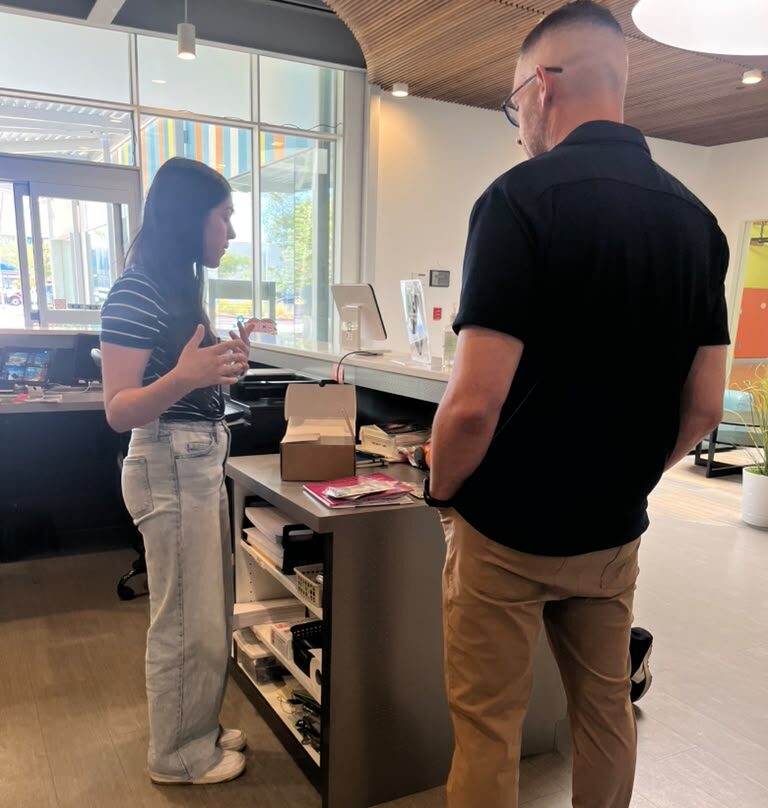
One of the coolest parts of the tour was seeing all of the different tools and technologies they have. I had seen some assistive technology before, but I was surprised by just how many everyday things can be adapted to make them easier to use. They have everything from measuring cups to calculators, along with technology that helps students learn.
I also learned that FBC creates educational materials in different formats, including Braille and large print. They even make coloring sheets for students. Seeing all of this made me think about how many ways there are to experience and learn STEM.
Something else that really stood out to me was the Trailblazers program. Participants take on challenging adventures, like swimming to Alcatraz or completing a major hike. They set a goal and work toward accomplishing it. I thought this was really inspiring because it shows how much dedication and resilience people can have when they are given the opportunity and support to try something challenging.
The tour also got me thinking about my own Action Plan and how I could work with FBC in the future. Through my nonprofit, Pathways 2 Potential, I am exploring the possibility of bringing weekly STEM demonstrations to their weekend schools. I would also like to provide take-home STEM kits so students can continue experimenting and exploring at home.
One idea I am especially excited about is turning my book about the brain into a Braille book with tactile images. I think it would be really cool for students with visual impairments to be able to learn about the brain through both Braille and images they can actually feel.
This experience made me realize that accessibility isn’t just about making one change. There are so many different ways to make learning more inclusive, and technology can play a huge role in that.
I went into the Foundation for Blind Children expecting to learn about the work they do. I left with a lot of ideas about what I can do, too. I’m excited to keep working on these ideas and find new ways to make STEM something that more students can experience for themselves.
Check out CSO Shireen’s Action Plan, Pathways to Potential, at her website: https://www.pathways-2-potential.com/